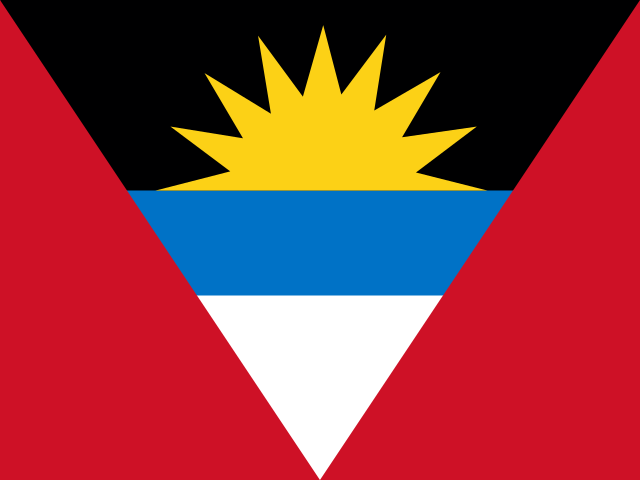
 Citizenship of Antigua and Barbuda
Overview
Antigua and Barbuda launched its programme under the Citizenship by Investment Act 2013, administered by a dedicated Citizenship by Investment Unit that accepts applications only through licensed agents. Since 1 July 2024 the programme has applied the harmonised Eastern Caribbean floor agreed by the five OECS programme states: no route may be priced below US$200,000. The current entry points are a US$230,000 National Development Fund contribution, a US$260,000 University of the West Indies Fund contribution for families of six or more, a US$300,000 approved real estate purchase, and a US$1.5 million business investment.
Applicants pass through multi-layered due diligence conducted by the CIU and external providers, a mandatory interview, and, increasingly, biometric capture. In September 2025 Antigua and Barbuda and the four other Eastern Caribbean programme states signed the agreement establishing the Eastern Caribbean Citizenship by Investment Regulatory Authority (ECCIRA), a regional regulator with powers over standards, registers of applicants, agents and developers, and sanctions. In July 2026 the government tabled a Citizenship by Investment (Amendment) Bill to align domestic law with that agreement, introducing annual independent financial audits, biennial operational audits and six-monthly reporting to the regional authority.
The external environment changed materially in 2025 and 2026. A United States presidential proclamation of 16 December 2025 placed partial entry restrictions on Antigua and Barbuda nationals from 1 January 2026, and US visitor visas for Antiguan passport holders are now issued with sharply reduced validity, with visa bonds possible. Visas issued before 31 December 2025 continue to be honoured. In June 2026 the European Commission wrote to all five Eastern Caribbean programme states asking them to phase out citizenship by investment by 1 June 2028, relying on the revised EU visa suspension mechanism in force since 30 December 2025. Visa-free Schengen access continues for now, but it is under formal review. The government has said it will not accept a unilateral phase-out and is negotiating through the OECS.
For the right family, the programme still delivers a recognised Commonwealth nationality, no worldwide tax on non-residents, and inclusion of a wide circle of relatives. It should, however, be approached as one element of a broader mobility and succession plan, with realistic expectations about travel access to the United States and the Schengen Area over the coming years.
Key benefits
- Single NDF price of US$230,000 covers a family of up to four, with the UWI route designed for families of six or more
- Broad dependant definition, including unmarried siblings and parents or grandparents aged 55 and over
- Future spouses and children of dependants can be added after citizenship is granted
- No requirement to live in Antigua and Barbuda; post-grant presence is limited to a short cumulative stay
- Antigua and Barbuda does not tax worldwide income of non-residents, and dual citizenship is permitted
- Citizenship passes to future generations under the country's nationality law
- Oversight by a regional regulator (ECCIRA) is designed to strengthen the programme's long-term credibility
Requirements
- Main applicant aged 18 or over with a clean criminal record and no pending investigations
- Proven lawful source of funds and source of wealth for the full investment and fees
- Successful completion of CIU due diligence, including checks by independent providers
- Mandatory interview, with biometric data captured under the regional standard
- Application filed only through a CIU-licensed agent
- Medical certificate and HIV test for each applicant
- Police certificates from countries of citizenship and long-term residence
- Not a person subject to EU or other applicable restrictive measures (exclusion strengthened from 2026)
- Post-grant physical presence: five days within five years under current statute, with 30 days applied administratively and proposed in law
Investment options
National Development Fund (NDF)
US$230,000
Non-refundable contribution covering a single applicant or a family of up to four. Government processing fee of US$10,000 (single) or US$20,000 (family of up to four), plus US$10,000 for each further dependant.
University of the West Indies (UWI) Fund
US$260,000
Contribution for families of six or more, inclusive of processing fees for a family of six, plus US$10,000 for each additional dependant. Includes a one-year tuition-only scholarship for one family member at the University of the West Indies.
Approved real estate
US$300,000
Purchase in a government-approved development under a binding sale agreement. The property must be held for five years unless reinvested in another approved project. Government processing fees and due diligence apply on top.
Business investment
US$1,500,000
Single investment in an approved business. Alternatively, two or more investors may make a joint investment totalling at least US$5,000,000, each contributing at least US$400,000.
Step-by-step process
- 1
Confidential assessment
We review family composition, nationality restrictions, travel history and source of wealth to confirm eligibility and choose the most efficient route.
- 2
Document preparation
Civil, financial and police documents are collected, certified, apostilled where needed and translated into English.
- 3
Submission through a licensed agent
The application is filed with the CIU together with full due diligence fees and 10% of the government processing fee, which is non-refundable.
- 4
Due diligence and interview
The CIU and its external providers run background checks; the main applicant and relevant dependants attend an interview and provide biometrics.
- 5
Approval and investment
On receipt of an approval letter the balance of fees and the qualifying investment are paid within the stated period.
- 6
Oath and passport
Certificates of registration are issued after the oath of allegiance, followed by passport issuance; first passports are typically issued with five-year validity.
Typical documents
- Completed CIU application forms for each applicant
- Certified copies of passports and national identity documents
- Birth and marriage certificates, and divorce or custody documents where relevant
- Police certificates for each applicant aged 16 and over
- Medical questionnaire and HIV test results
- Bank reference and evidence of source of funds and source of wealth
- Professional or employment references and business documents
- Proof of residential address and passport-standard photographs
- Real estate sale agreement or business investment documentation, where applicable
How Legal Wealth helps

Legal Wealth approaches Antigua and Barbuda citizenship as part of a wider family strategy rather than a stand-alone purchase. We assess whether the programme suits your family's travel needs in light of the 2026 US visa measures and the EU review, prepare a source-of-wealth narrative that stands up to enhanced vetting, coordinate with a licensed agent and local counsel, and keep your personal data on a strict need-to-know basis. Where appropriate, we align the new citizenship with your holding structures, banking relationships and succession planning so that it supports, rather than complicates, your long-term arrangements.
Enquire with Legal WealthFrequently asked questions
What is the total government cost for a family of four via the NDF?
The contribution is US$230,000 and the government processing fee is US$20,000. Due diligence fees are added per person: US$8,500 for the main applicant, US$5,000 for a spouse, nothing for children under 12, US$2,000 for children aged 12-17 and US$4,000 for dependants aged 18 and over. Passport fees are US$300 per person.
Do I have to live in Antigua and Barbuda?
No. The Act requires only five days of presence within the first five years. The Prime Minister has stated that a 30-day requirement is already applied administratively under the regional agreement, and an amending bill tabled in July 2026 would put 30 days, counted on a family basis over five years, into law.
How are Antiguan passport holders affected by US visa changes?
Since 1 January 2026 Antigua and Barbuda has been subject to partial US entry restrictions under a December 2025 proclamation. Visitor visas are now issued with much shorter validity and a visa bond may be required. Visas issued before 31 December 2025 continue to be honoured.
Will visa-free travel to Europe continue?
For now, yes. However, the European Commission has asked the five Eastern Caribbean states to phase out their programmes by 1 June 2028, and access could be reviewed under the EU visa suspension mechanism. Clients should not treat Schengen access as a permanent feature.
Who can be included as a dependant?
A spouse, children up to 30 who are financially dependent, disabled adult children, parents or grandparents aged 55 and over who are dependent, and unmarried siblings of the applicant or spouse. Future spouses and children can be added later for a fee.
Are any nationalities excluded?
The CIU applies heightened scrutiny and restrictions to certain nationalities, and persons subject to EU restrictive measures are excluded. Eligibility should be confirmed case by case before any funds are committed.
Last reviewed: 2026-10. Requirements, fees and timelines change. Information is general, reviewed on the date shown, and is not legal or tax advice.
Sources
- Antigua and Barbuda CIU - Schedule of fees
- Antigua and Barbuda CIU - Dependants
- Antigua and Barbuda CIU - Statement on U.S. visa restrictions (19 December 2025)
- Antigua Observer - Annual audits, 30-day residency among CIP amendments
- IMI Daily - EU asks Caribbean states to end CBI by June 2028
- Henley Passport Index - Ranking