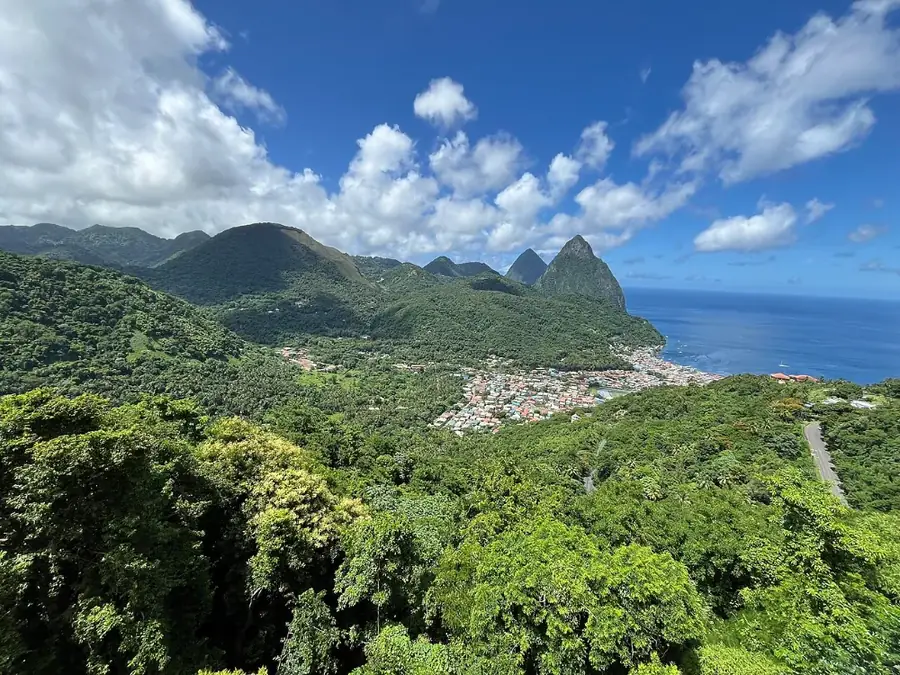
 Forex licence in Saint Lucia
Overview
Unlike Mauritius, Seychelles or Vanuatu, Saint Lucia has not enacted a licence designed for retail forex and CFD brokers. A number of brokers incorporate a company in Saint Lucia and offer trading services to clients abroad without a local licence. That model is legally possible only because no specific regime applies; it does not make the broker regulated, and it should never be presented to clients as such.
The licensed route for securities business runs through the Eastern Caribbean Securities Regulatory Commission, which regulates the securities markets of the eight Eastern Caribbean Currency Union members, including Saint Lucia, under uniform Securities Acts. The ECSRC licenses broker-dealers, limited service brokers and investment advisers. These licences were designed for the regional securities market; whether a particular forex or CFD offering falls within the statutory definition of securities requires product-by-product legal analysis, and the ECSRC applies a full due diligence process, including on-site examination.
Saint Lucia's Financial Services Regulatory Authority supervises non-bank financial institutions, including money services businesses under the Money Services Business Act. Activities such as money transmission or currency exchange require a licence under that Act; this does not amount to an investment dealing licence for leveraged trading.
The company law background has also changed. Following commitments to the OECD and the EU, Saint Lucia amended its International Business Companies regime: IBCs registered from 1 January 2019 are tax resident and subject to substance requirements, and grandfathered tax benefits for earlier IBCs ended on 30 June 2021. Banks and payment providers increasingly decline unlicensed brokers, and regional regulators such as St Vincent and the Grenadines have already moved against unregulated FX models. We therefore usually advise clients to pair any Caribbean presence with a properly licensed entity elsewhere.
Key benefits
- Clear, transparent advice on what Saint Lucia can and cannot provide
- Access to a genuine regional licence through the ECSRC for securities business
- ECSRC licensing gives a recognised supervisory framework across the Eastern Caribbean Currency Union
- Modest statutory fees for ECSRC licences compared with major financial centres
- Option to combine a Caribbean company with a licensed broker in Mauritius, Seychelles or Labuan
- Saint Lucia's citizenship by investment programme can complement a broader regional plan for founders
Requirements
- For ECSRC licences: a company incorporated, registered or established in an ECCU member territory
- Paid-up capital of EC$1 million for a broker-dealer, or EC$250,000 for a limited service broker
- At least two ECSRC-licensed persons: a principal and a representative, both certified under the ECSM programme
- Directors and officers of good character and reputation
- Premises acceptable to the ECSRC and professional indemnity insurance or a fidelity bond
- Audited financial statements, or an audited opening balance sheet and three-year projections for start-ups
- AML/CFT compliance under Saint Lucia's Money Laundering (Prevention) legislation
- A licence under the Money Services Business Act where money transmission or currency exchange is conducted
Licence options & capital
ECSRC broker-dealer licence
EC$1,000,000 paid-up capital
Full securities licence for dealing and brokerage. Application fee EC$1,000, licence fee EC$3,000 and annual renewal EC$2,000 each 1 April, plus on-site examination costs.
ECSRC limited service broker licence
EC$250,000 capital
A narrower brokerage licence. Application fee EC$750, licence fee EC$2,000 and annual renewal EC$1,500.
Unlicensed company model
No regulatory capital
Operating through a Saint Lucia company without a licence. Not regulated, increasingly difficult to bank and exposed to future regulatory change. We do not recommend this as a standalone model.
Licensed entity elsewhere
From USD 100,000
Pairing any Caribbean structure with a licence in Seychelles, Mauritius or Labuan, which provide a dedicated framework for forex and CFD brokerage.
Step-by-step process
- 1
Model review
Analyse your products and target markets to determine whether they fall within the ECSRC securities framework or need a licence elsewhere.
- 2
Structure design
Decide between an ECSRC licence, a licence in another jurisdiction, or a combination, and plan substance accordingly.
- 3
Company formation
Incorporate the appropriate company under Saint Lucia's Companies Act or International Business Companies Act.
- 4
Licence application
For the ECSRC route, file Form 1 with corporate documents, operations manual, projections and insurance evidence.
- 5
Due diligence and approval
Support the ECSRC's review and on-site examination through to approval and payment of the licence fee.
- 6
Ongoing compliance
Annual renewal, audited accounts, AML reporting and maintenance of licensed principals and representatives.
Typical documents
- Certified certificate of incorporation or continuance
- Certified memorandum, articles and by-laws
- Audited financial statements for three years, or opening balance sheet and three-year projections
- Organisational chart and general operations manual
- Form 5 register of interest in securities
- Certified professional indemnity insurance or fidelity bond
- Personal due diligence for directors, officers and beneficial owners
- AML/CFT policies and procedures
How Legal Wealth helps

Legal Wealth gives clients a candid view of Saint Lucia before any money is committed. Where the ECSRC route fits, we prepare the application and governance framework; where it does not, we design a structure that places the brokerage in a properly licensed jurisdiction and uses Saint Lucia only where it adds genuine value. Our advice is compliance-first, discreet and coordinated with the founders' wider residence, citizenship and succession planning. Contact info@legalwealthglobal.com.
Enquire with Legal WealthFrequently asked questions
Does Saint Lucia issue a forex licence?
No. There is no dedicated licence for retail forex or CFD brokers. Providers advertising a Saint Lucia forex licence are usually referring to company registration, which is not regulation.
Is it legal to run a forex broker from a Saint Lucia company?
Absent a specific regime, it may not be prohibited locally, but the broker remains unregulated and must still comply with the laws of every country where it solicits clients. Many of those countries prohibit unlicensed offers.
What does the ECSRC broker-dealer licence cost?
The ECSRC charges an application fee of EC$1,000, a licence fee of EC$3,000 and an annual renewal fee of EC$2,000, and requires paid-up capital of at least EC$1 million. On-site examination costs are borne by the applicant.
Do IBCs in Saint Lucia still enjoy tax exemption?
No longer automatically. IBCs registered from 1 January 2019 are tax resident and must meet substance requirements, and grandfathered benefits for earlier IBCs ended on 30 June 2021.
What alternative do you recommend?
For a lower-cost dedicated forex licence, Seychelles, Mauritius or Labuan are usually more suitable. The choice depends on the execution model, capital and target markets.
Last reviewed: 2026-10. Requirements, fees and timelines change. Information is general, reviewed on the date shown, and is not legal or tax advice.
Sources
- ECSRC – Requirements for Broker Dealer Licence
- ECSRC – Requirements for a Limited Service Broker Licence
- Attorney General's Chambers – Securities Act (Revised Laws of Saint Lucia)
- Attorney General's Chambers – Money Services Business Act
- EY Tax News – Saint Lucia complies with its international commitments (2018)