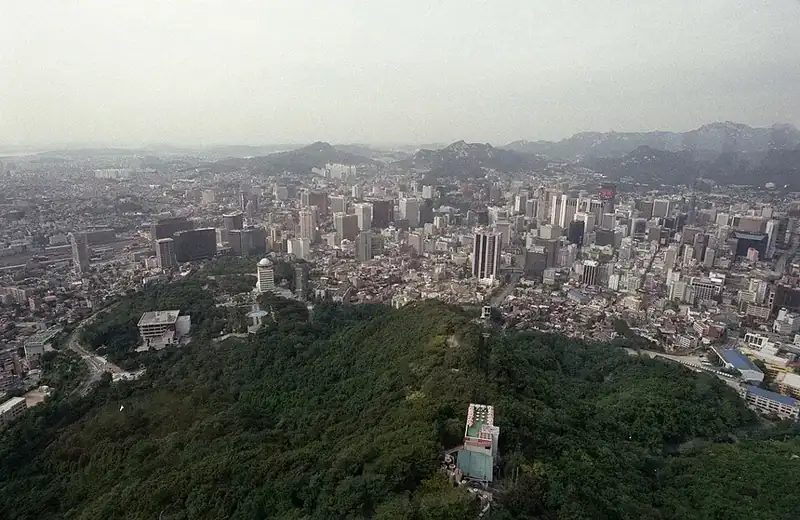
 Investment immigration in South Korea
Overview
Korea's investment immigration schemes are run by the Ministry of Justice's Korea Immigration Service under the Immigration Act, with parameters set by Ministry notices. The tourism and resort facility scheme, formerly called real estate investment immigration, began in Jeju in 2010 and now covers designated zones including Jeju and the Songdo, Yeongjong and Cheongna districts of the Incheon Free Economic Zone. Only specified facilities such as resort condominiums, accommodation and tourist complexes qualify, not ordinary apartments. The Jeju threshold doubled to KRW 1 billion in 2023, and in February 2026 Jeju extended the scheme to 31 December 2027, the same end date as Incheon. Funds must come from abroad and the property must be registered before F-2 is granted; F-1 visiting status is available once payments exceed KRW 100 million.
The public business scheme channels foreign capital into designated funds supporting Korean small and medium-sized enterprises. Since 29 June 2023 the general tier requires KRW 1.5 billion for F-2 residence, with F-5 permanent residence after five years; the high-value tier requires KRW 3 billion and grants F-5 immediately on a pledge to hold the investment for five years. The KRW 300 million retiree route was abolished. Under both schemes the investment cannot be sold, leased or pledged during the holding period, and applicants with criminal records, tax arrears or repeated immigration violations are excluded.
F-2 investors may carry on economic activity freely. There is no published day count, but an F-2 holder must return within one year of leaving to keep the status. The spouse and unmarried children receive F-2 with the investor. An individual domiciled in Korea or present for 183 days or more is tax resident; foreigners resident for five years or less in the previous ten are taxed on foreign income only when paid in or remitted to Korea, and on worldwide income thereafter at progressive national rates plus local income tax. Inheritance and gift tax, at up to 50%, should be reviewed before relocating.
F-5 permanent residence removes renewals and most activity restrictions, and under the resort scheme the investor may then sell the property. Citizenship is a separate step: since December 2018, general naturalisation has required permanent residence and five years of residence, plus conduct, means, Korean language and civics requirements. Dual nationality is allowed only in limited categories, such as special merit or outstanding talent, on a pledge not to exercise the foreign nationality in Korea; most investors who naturalise must renounce their original nationality within one year.
Key benefits
- F-2 residence with freedom to work and do business, and a defined five-year route to F-5 permanent residence
- Immediate permanent residence for investors who choose the KRW 3 billion public business tier
- Spouse and unmarried children included in the same F-2 status
- A principal-guaranteed, interest-free public fund option that returns capital after five years
- Freedom to sell the resort property and relocate within Korea once F-5 is granted
- A remittance-basis treatment of foreign income during the first five years of residence
- Access to Korea's advanced economy, education and healthcare systems
Requirements
- Foreign national with no disqualifying criminal record, tax arrears or repeated immigration violations
- Investment of at least KRW 1 billion in a Ministry of Justice-designated tourism or resort facility, or at least KRW 1.5 billion in designated public business funds
- Investment funds transferred from overseas and reported under the Foreign Exchange Transactions Act
- Full payment and registration of the property before F-2 is issued (resort facility scheme)
- No sale, lease, pledge or seizure of the investment during the holding period, and no profit-making use of the property
- Investment maintained for five years before applying for F-5
- Re-entry to Korea within one year of any departure to maintain F-2 status
- Documented lawful source of funds and proof of family relationships for dependants
Investment options
Tourism and resort facility investment (RBI)
KRW 1,000,000,000
Purchase of a designated resort or accommodation facility in Jeju, the Incheon Free Economic Zone or another designated zone. Grants F-2 residence, with F-5 permanent residence after five years. Jeju and Incheon run until 31 December 2027.
Public business investment – general (RBI)
KRW 1,500,000,000
Deposit in a Ministry of Justice-designated fund, either principal-guaranteed and interest-free or invested in development projects. Grants F-2 residence, with F-5 after five years.
Public business investment – high-value (permanent residence)
KRW 3,000,000,000
Grants F-5 permanent residence immediately on a pledge to maintain the investment for five years.
Combined resort and public business investment (RBI)
KRW 1,500,000,000 in total
Ministry guidance allows a resort facility investment and a public fund investment to be combined to reach the KRW 1.5 billion public business threshold.
D-8 corporate investment visa (temporary residence)
KRW 100,000,000
For foreign investors who establish or invest in a Korean company under the Foreign Investment Promotion Act. Renewable, and suited to active entrepreneurs rather than passive investors.
Step-by-step process
- 1
Eligibility and structuring
Review of the family's profile, funds and objectives, and choice between the resort facility and public business schemes. Allow two to four weeks.
- 2
Project selection and preliminary approval
Selection of a designated project and, for resort facilities, a Preliminary Approval Certificate from the competent immigration office (Incheon or Jeju).
- 3
Registration and remittance
Registration number for foreign real estate purchasers, opening of a Korean bank account and remittance of funds from abroad under the Foreign Exchange Transactions Act.
- 4
Investment and interim status
Signing of the purchase or fund subscription. F-1 visiting status is available once resort facility payments exceed KRW 100 million.
- 5
F-2 residence
Full payment, property registration or fund confirmation, then the F-2 application for the investor, spouse and unmarried children.
- 6
Five-year holding and F-5 application
The investment is maintained for five years without disqualifying events, then the investor applies for F-5 permanent residence. If F-5 is refused, an F-2 extension may be possible.
Typical documents
- Passport and alien registration application with photographs
- Preliminary Approval Certificate for the designated project (resort facility scheme)
- Purchase contract, real estate registry certificate and acquisition tax receipt
- Fund subscription certificate from the designated bank (public business scheme)
- Proof of overseas remittance and foreign exchange reporting
- Criminal record certificate from the country of nationality or residence
- Source-of-funds evidence such as bank statements, sale agreements or dividends
- Marriage and birth certificates, apostilled and translated, for family members
- Tax payment certificates confirming no arrears
How Legal Wealth helps

Legal Wealth approaches Korean investment immigration as a long-term residence and estate decision. We compare the resort facility and public business schemes against the family's liquidity and five-year commitment, prepare a source-of-funds file to Korean bank and immigration standards, and coordinate project due diligence and filings with licensed Korean counsel and tax advisers, planning the remittance-basis period and inheritance tax exposure before relocation. Engagements are confidential and tailored. To begin a discreet review, contact info@legalwealthglobal.com.
Enquire with Legal WealthFrequently asked questions
Is this citizenship by investment?
No. Investment leads to F-2 residence and then F-5 permanent residence. Korean nationality is available only through naturalisation, which requires permanent residence, five years of residence, language and civics tests, and usually renunciation of other nationalities.
Can I buy any apartment in Seoul to qualify?
No. Only facilities designated by the Ministry of Justice in specified zones qualify, such as resort condominiums and tourist accommodation in Jeju or the Incheon Free Economic Zone. Ordinary residential purchases elsewhere do not.
What happened to the KRW 500 million options?
In 2023, the Jeju resort facility threshold rose from KRW 500 million to KRW 1 billion, and the general public business threshold rose from KRW 500 million to KRW 1.5 billion. The KRW 300 million retiree route was abolished.
Is my capital returned under the public business scheme?
Under the principal-guaranteed option, principal is returned without interest after five years; under the risk-based option, returns depend on the designated projects.
Do I have to live in Korea?
There is no published minimum number of days, but F-2 status lapses if you stay abroad for more than one year without returning. A genuine connection to Korea also matters when you apply for F-5.
How long is the Jeju scheme available?
The Jeju tourism and resort facility scheme was due to end on 30 April 2026. In February 2026 it was extended to 31 December 2027, with the KRW 1 billion threshold unchanged.
Last reviewed: 2026-10. Requirements, fees and timelines change. Information is general, reviewed on the date shown, and is not legal or tax advice.
Sources
- Korea Immigration Service (Ministry of Justice) – Investment Immigration Scheme for Public Business
- Korea Immigration Service – Overhaul of investment immigration thresholds (29 June 2023)
- Incheon Free Economic Zone Authority – Tourist/resort facility investment immigration
- Jeju extends tourism and resort facility investment immigration to end-2027 (February 2026)