


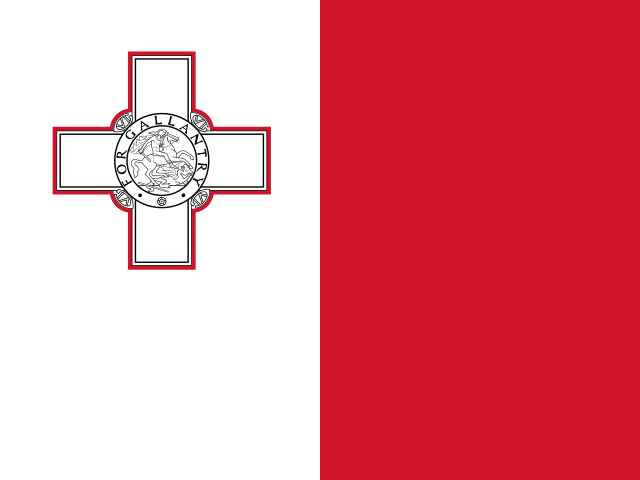
 Crypto licence in Malta
Overview
Malta's Virtual Financial Assets Act of 2018 gave the island an early, bespoke crypto regime. With MiCA, the MFSA became the competent authority under the Markets in Crypto-Assets Act, which brings the EU regulation into Maltese law, and the VFA service licence is being phased out. Firms licensed under the VFA framework before 30 December 2024 could apply through a simplified procedure at a reduced fee, while all other applicants follow the full MiCA authorisation process, beginning with a statement of intent to the MFSA.
The transitional measures under Article 143(3) of MiCA, implemented in Malta's VFA Act, expired on 30 June 2026. In a joint letter of June 2026, the MFSA and FIAU required operational VASPs without a CASP licence to stop onboarding and marketing, restrict activity to closing positions and transferring assets, and protect clients through an orderly exit. Remaining VFA service licences are cancelled automatically on 2 July 2026, or earlier when a MiCA decision is taken.
Malta's attraction is its English-language supervision, an experienced local ecosystem of compliance officers, auditors and system auditors, and a published fee schedule. The MFSA has nevertheless become noticeably more demanding: an ESMA peer review published in July 2025 asked it to strengthen its authorisation assessments, and applicants should expect detailed scrutiny of substance, governance and the realism of the business plan.
AML/CFT supervision is carried out with the Financial Intelligence Analysis Unit (FIAU), with particular focus on sanctions screening, the Travel Rule and transfers involving self-hosted wallets.
Key benefits
- English-language regulator and legal system with common-law influences
- Transparent, published fee schedule for applications and supervision
- Mature local talent pool for compliance, MLRO and audit functions
- Single EU authorisation passportable to all Member States
- Experience with crypto supervision dating back to 2018
- Combinable with Maltese residence planning for founders and families
Requirements
- Maltese legal person with place of effective management in the EU and at least one EU-resident director
- Minimum capital or prudential safeguards per MiCA Article 67
- Board and senior management meeting fitness and propriety standards, with a credible local presence
- Qualified compliance officer and money laundering reporting officer
- Shareholder due diligence and source-of-wealth evidence for qualifying holders
- Programme of operations, three-year business plan and financial projections
- Client-asset segregation and custody policy for Class 2 and Class 3 services
- AML/CFT procedures meeting FIAU Implementing Procedures, including the Travel Rule
- ICT and operational resilience framework consistent with DORA
- Orderly wind-down plan and complaints procedure
Licence options & capital
Class 1 CASP
EUR 50,000 minimum capital
Reception and transmission of orders, execution of orders on behalf of clients, placing of crypto-assets, transfer services, advice and portfolio management. MFSA application fee EUR 10,000.
Class 2 CASP
EUR 125,000 minimum capital
Any Class 1 service plus custody and administration of crypto-assets for clients and exchange of crypto-assets for funds or for other crypto-assets.
Class 3 CASP
EUR 150,000 minimum capital
Any Class 2 service plus operation of a trading platform for crypto-assets. In every class, prudential safeguards must equal the higher of the fixed amount or one quarter of the previous year's fixed overheads.
Step-by-step process
- 1
Statement of intent
Submit a statement of intent to the MFSA describing the project, ownership and proposed services, opening the regulatory dialogue.
- 2
Structuring and substance
Incorporate the Maltese company, appoint the board, compliance officer and MLRO, and arrange office, banking and auditors.
- 3
Application file
Prepare the MiCA application forms, business plan, policies and personal questionnaires, and pay the application fee.
- 4
Completeness and assessment
The MFSA checks completeness within 25 working days and assesses the complete file within 40 working days, subject to one suspension for further questions.
- 5
Pre-licensing conditions
Satisfy any conditions such as capital injection, final IT audits or appointment confirmations before the licence is issued.
- 6
Authorisation and passporting
Commence operations, pay the annual supervisory fee due each July, and notify the Member States you intend to serve.
Typical documents
- Memorandum and articles of association
- Statement of intent and MiCA application forms
- Business plan with three-year financial projections
- Personal questionnaires, CVs and police conduct certificates for directors and key function holders
- Group structure chart and qualifying shareholder documentation
- AML/CFT business risk assessment and procedures
- ICT, security and business continuity policies
- Custody, safeguarding and conflicts-of-interest policies
- Wind-down plan and complaints procedure
How Legal Wealth helps

Legal Wealth prepares Malta applications to the standard the MFSA now expects, with emphasis on genuine substance and defensible governance rather than paperwork. We coordinate the local board and key function appointments, the AML framework and the application file, and we can align the licensing project with Maltese residence options and the long-term holding structure of the founders, discreetly and under a single point of contact.
Enquire with Legal WealthFrequently asked questions
Is the Maltese VFA licence still valid?
No. The transitional period ended on 30 June 2026 and VFA service licences are cancelled automatically by 2 July 2026. Crypto-asset services now require MiCA authorisation.
What are the MFSA fees?
Application fees are EUR 10,000, EUR 20,000 and EUR 25,000 for Classes 1, 2 and 3. Annual supervisory fees are EUR 25,000 for Class 2 and EUR 50,000 for Class 3; Class 1 starts at EUR 10,000 with additional per-service and volume-based elements.
How long does authorisation take in Malta?
MiCA sets formal deadlines of 25 working days for completeness and 40 working days for assessment, but the pre-filing stage, MFSA questions and pre-licensing conditions mean that several months should be planned.
Do directors need to live in Malta?
MiCA requires at least one EU-resident director and effective management in the EU. In practice the MFSA expects a meaningful local presence, including senior management and control functions based in Malta.
Can I issue a token from Malta as well?
Yes. Crypto-asset white papers are notified to the MFSA; the notification fee for a crypto-asset other than an ART or EMT is EUR 2,500.
Last reviewed: 2026-10. Requirements, fees and timelines change. Information is general, reviewed on the date shown, and is not legal or tax advice.